
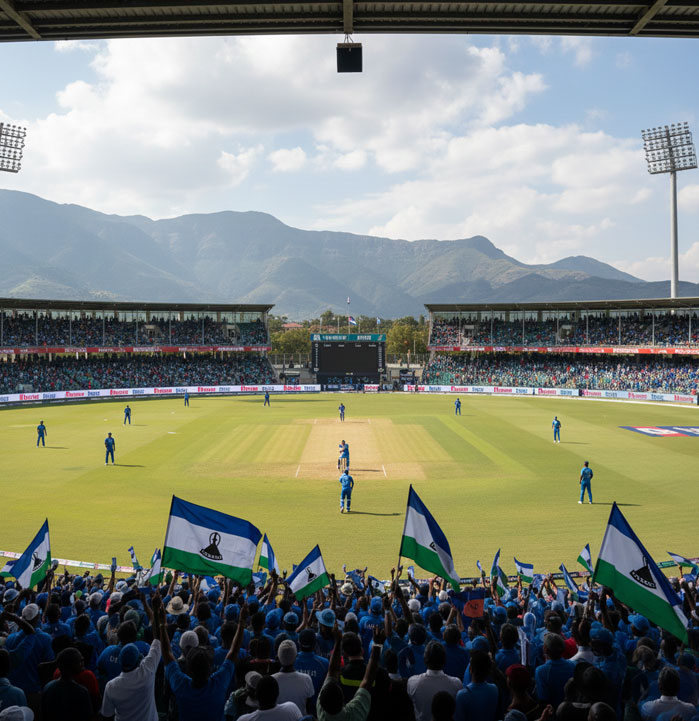
Phased Development Plan (2026–2029)
The Lesotho Cricket Association (LCA) has developed a four-year phased blueprint designed to build a strong, sustainable, and competitive cricket ecosystem in the Kingdom of Lesotho. The plan progresses from foundational structures to national recognition, ensuring measurable growth in Structure, Sustainability, Exposure, and Governance.
Phase 1: Foundation & Qualifier Readiness (2026)
In this phase, the LCA focuses on rebuilding structures, preparing national teams, and creating a strong base for nationwide participation.
- Reactivate district associations and strengthen governance structures.
- Construct two hybrid wickets in Maseru and Butha-Buthe.
Engage 50 schools through “Cricket Weeks” and train 20 PE teachers (ICC Level 0).
- Launch pilot school and district leagues.
- Conduct national training camps for Men’s, Women’s, and U19 national teams.
- Draft a regional partnership framework for facility and technical support.
- Host one bilateral series in the Southern African region.
Outcome :
- Strong foundational structure.
1,000 registered players.
Formal participation readiness for qualifiers.
Strengthened governance and district activity.
Phase 2: Expansion & System Strengthening (2027)
This phase focuses on expanding participation, improving coaching systems, and strengthening competitions.
- Add two more hybrid wickets (Mafeteng and Leribe).
- Launch the first High Performance Hub (Central Region).
Expand school participation to 100 schools across all districts.
- Certify 10 new ICC Level 1 coaches; initiate umpire and scorer training.
- Host two bilateral series and introduce inter-district championships.
- Launch of the National Women’s Cricket Festival.
- Implement district-level data collection via CricHeroes.
Outcome :
- Strengthened competition structure
2,000 registered players.
improved district engagement.
30% women’s participation.
Phase 3: Competitive Development & Exposure (2028)
Here, LCA focuses on building competitive structures, high-performance environments, and international exposure.
- Establish two additional High-Performance Centers (North & Central).
- Implement a promotion/relegation league structure for clubs.
- Introduce the “Cricket Passport” system tracking player progression (U15 →
U19 → Senior). - Host three bilateral series and facilitate Basotho player integration into
regional leagues. - Certify 10 new ICC Level 2 coaches.
- Expand national media coverage and analytics reporting.
- Conduct centralized elite training camps with 3-month pre-qualifiers.
Outcome :
- 4,000 registered players.
- Improved ICC T20I ranking (Top 60);.
- Enhanced media visibility and professionalized structures
Phase 4: Sustainability & National Recognition (2029)
The final phase aims at long-term sustainability, financial stability, and full national cricket recognition.
- Complete three regional cricket hubs (North, Central, South).
- Host a regional ICC event following certification.
- Establish an independent Women’s League; train 3 Level 1+ female coaches.
- Expand to 250 schools, 20 clubs, and 5,000 registered players.
- Facilitate four bilateral series annually.
- Ensure 10 Basotho players compete in foreign or provincial leagues.
- Conduct annual technical and financial audits, reviewed by the LCA Executive
and ICC Africa. - Secure 50% of funding through sponsorships and league-generated revenue.
Outcome :
A competitive, financially stable, and fully Basotho-led cricket ecosystem, recognized regionally for governance excellence, performance growth, and gender inclusivity.